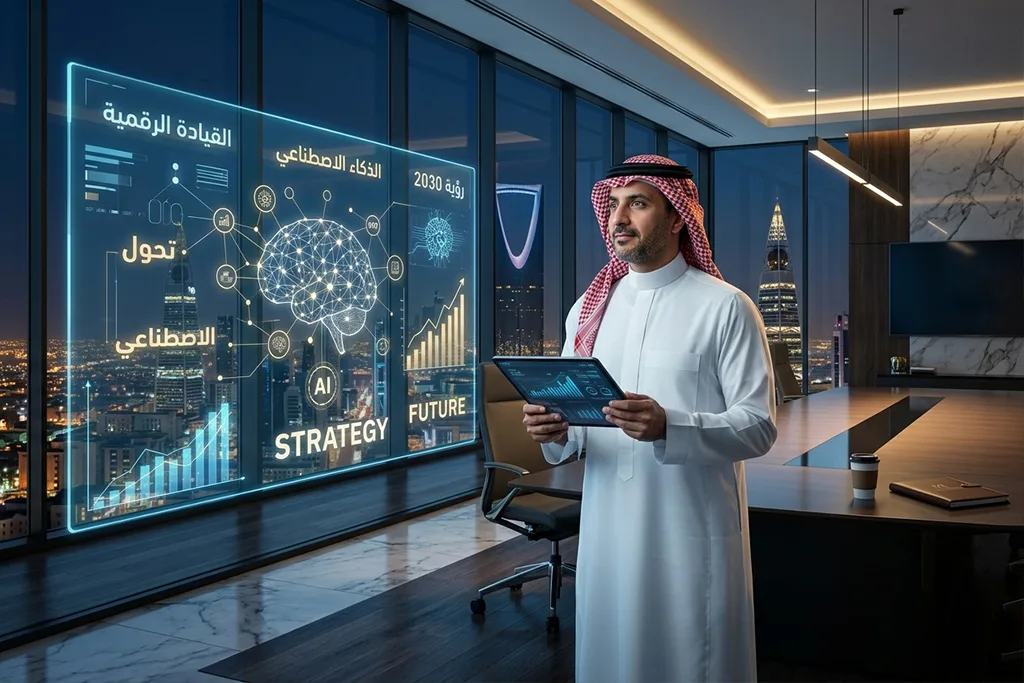
Digital Leadership:
Essential Skills for Leaders in the Era of AI and Rapid Technological Transformation
Leadership in the Eye of the Digital Storm
Digital transformation is no longer just a technical option adopted by an organization’s IT department; it has become a quintessential “leadership challenge.” In the age of Artificial Intelligence (AI) and Big Data, it is no longer sufficient for a leader to possess traditional vision. They must be capable of leading a “hybrid” organization that combines human intelligence with machine power. Digital Leadership does not mean a leader must be a programmer; rather, it means possessing the mindset that allows them to harness technology to achieve strategic goals that exceed expectations.
I. The Digital Mindset
The first pillar of a digital leader is “mindset” before “skill.” Digital leaders are characterized by:
- Cognitive Flexibility: The ability to let go of old management concepts and adopt Agile ways of working.
- Experimentation and Rapid Learning: In the digital age, “perfect” is the enemy of “fast.” A digital leader encourages the launch of prototypes and learning from mistakes quickly, rather than over-planning that might become obsolete.
- Data-Driven Decision Making: Transitioning from “managerial intuition” to “digital insight,” where data becomes the true compass for identifying market trends and customer preferences.
II. Essential Leadership Skills in the AI Era
Success in leading modern organizations requires honing a new set of skills:
1. Data Literacy
A leader is not required to be a data scientist, but they must know “what to ask.” The ability to read analytical reports and understand how AI can improve productivity or reduce costs is a survival skill in the current era.
2. EQ in a High-Tech World
The more technology dominates, the higher the value of the “human touch.” A digital leader is one who can maintain team cohesion, foster belonging, and manage human fears of automation and AI, turning the machine into a collaborator for the employee rather than a replacement.
3. Managing Virtual and Hybrid Teams
Digital leadership requires a superior ability to manage teams that do not necessarily meet in one place. Building trust through screens and measuring productivity by results rather than hours worked are essential skills for the modern leader.
III. Ethical Challenges of Digital Leadership
With the great power granted by AI comes greater responsibility. A distinguished digital leader is one who establishes “digital ethics frameworks” within their organization, ensuring:
- Fair and responsible use of data.
- Transparency in how algorithms make decisions affecting employees or customers.
- Maintaining digital privacy as a supreme corporate value.
IV. Digital Leadership and Saudi Vision 2030
The Kingdom of Saudi Arabia is currently leading a global technological movement through smart cities like NEOM and comprehensive digital transformation across all sectors. The Saudi leader today is at the heart of this movement; thus, possessing digital leadership skills is no longer an extra advantage—it is the primary requirement for contributing to the building of a knowledge economy and achieving the Vision’s goals of making the Kingdom a global model in technical innovation.
V. Practical Steps to Becoming a Digital Leader
- Continuous Learning: Dedicate weekly time to follow the latest tech trends in your sector.
- Embracing Change from the Top: Be the first to use new digital tools within the organization to send a strong message to your team.
- Investing in Digital Talent: Seek out competencies with “digital intelligence” and grant them the authority to lead change.
The Future Does Not Wait
Digital leadership is not a destination we reach, but a continuous journey of adaptation and evolution. Leaders who fear technology will find themselves left behind, while those who embrace it as a strategic partner will lead their organizations toward unprecedented horizons. The machine may grant us power, but humans provide it with direction and meaning.
– This article has been reframed using AI.